

In October we ran a small test. Three of our staff became the client, and each one ordered branded water bottles from a different supplier. Same bottle. Same logo. Same instructions. We wanted to see what a normal client goes through when they shop around.
We got back three different bottles. Not one of them matched our brand.
For clarity: Fancy Inc did not brand any of the bottles in this test. They came from three other suppliers, and we are not naming them. This post is about standards, not about anyone in particular.
What we asked for
The brief was simple on purpose. A plastic water bottle, our logo, a small quantity, delivered. We sent the logo file and waited to see what would happen next.
What happened next
- Nobody phoned us.
- Nobody followed up on a quote. If we had not pushed to place the order, nobody would have chased it.
- Nobody asked for our Pantone colours or our CI.
- Nobody asked where the logo should go.
- Nobody asked what the bottles were for.
We uploaded a logo, paid and waited. It felt like a vending machine. Put the logo in, take whatever falls out.
What came back
Put the three bottles side by side and the problem is obvious. The blue changes from bottle to bottle. The logo sits at a different angle and position on each one. The green does not match our CI on any of them.
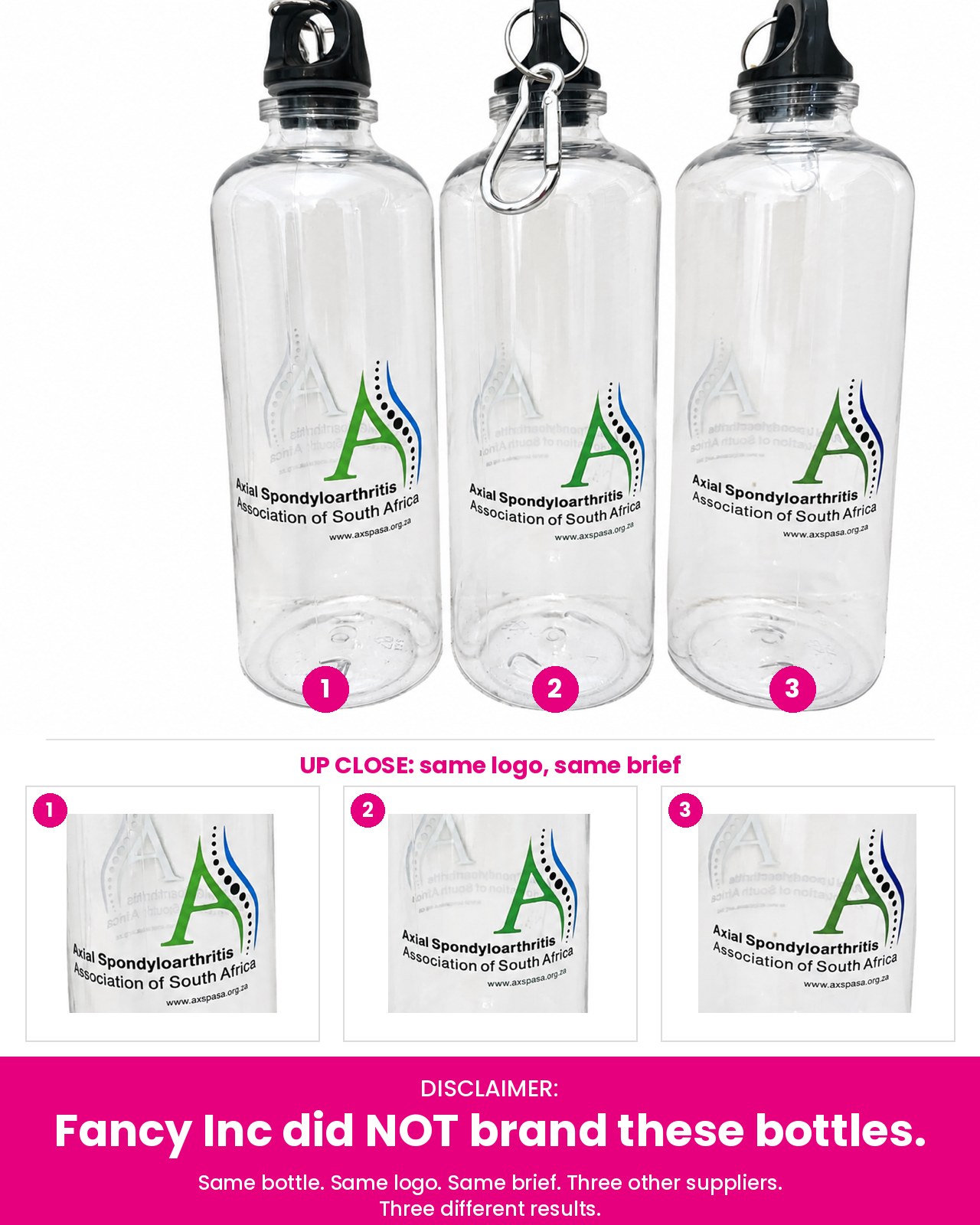
None of this is a printing disaster. Each bottle on its own looks fine, and that is the point. A client who orders once from one supplier would probably never notice. But put those branded water bottles next to your signage, your website and your uniforms, and your brand starts to look like three different companies.
The question nobody asked
The most expensive gap was not the colour. It was purpose.
These bottles were meant for young adults to pack in their lunch tins. A screw-top bottle is the wrong choice for that. It leaks in a bag and the lid goes missing. One question, “what are these for?”, would have pointed us to a flip-top or a sports cap instead.
That is the difference between a supplier and a partner. We wrote about it in Supplier vs brand partner, and this test is the clearest example we have seen.
7 questions a supplier should ask before printing your logo
Whoever you order from, you should hear most of these before anything is printed. If you don’t, ask them yourself.
- What is the item for, and who will use it?
- Where will it be used: in a bag, on a desk, outdoors, in a dishwasher?
- Do you have a CI or brand guide?
- What are your Pantone colours?
- Where on the item should the logo sit, and how big should it be?
- Which branding method suits this item and this logo?
- Can we send you a proof before we print?
The last one matters most. A proof, signed off before production, is the cheapest way to avoid a box of bottles you can’t use. There is more on what to look for in How to choose a corporate gifting supplier in South Africa.
Automate the admin, not the care
We are not against automation. We use it for quotes and invoices, and it saves us hours every week. But a system will happily put a screw top in a lunch tin. It can’t ask what the bottle is for, notice that the logo green is off, or suggest a better product for the job. A person can.
So we automate the paperwork and keep the conversations. We ask for the CI, we check the Pantone, we ask who the item is for, and we send a proof before anything is printed.
Choosing branded water bottles that fit the job
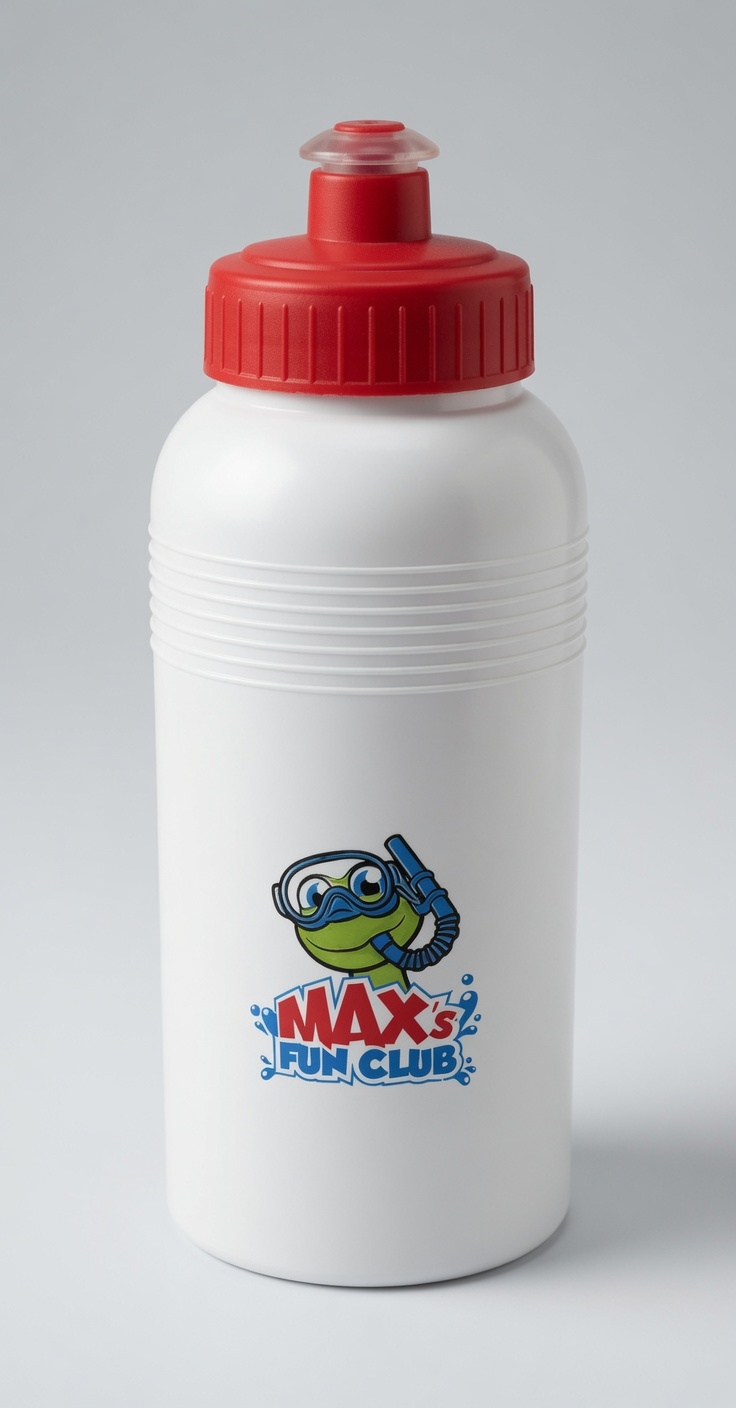
- Lunch boxes and school bags: flip-top or sports-cap plastic bottles that are light and less likely to leak.
- Office and gym: stainless steel bottles that keep drinks cold all day.
- Outdoor and events: bigger 800ml to 1 litre bottles.
- Eco-conscious brands: recycled PET or glass.
Our drinkware range has more than 200 options, from plastic bottles at around R19 to stainless steel at around R94 and vacuum bottles at around R189. If sustainability matters to your brand, see our eco drinkware.
Frequently asked questions
Why do branded water bottles come out in the wrong colour?
Usually because the supplier printed from a logo file without checking your Pantone references. Screens and printers show colour differently, so the Pantone is the only reliable match.
Should I always ask for a proof?
Yes. A proof shows the logo size, position and colour on the actual item before production. Signing it off protects you and the supplier.
How long do branded water bottles take?
Our usual lead time is 7 to 10 working days from artwork approval, depending on the branding method and quantity.
Want branded water bottles that actually match your brand? Get a quick quote and we will ask the questions first.